

Why I Switched to a Browser Extension Wallet (and Why Rabby Felt Right)
So I was mid-trade the other day when my usual wallet stalled. Wow! The gas estimate froze. My heart skipped. Something felt off about the UX and security trade-offs. Initially I thought this was just another flaky dApp moment, but then I noticed a pattern across a few extensions I’d used and realized I was being careless without even meaning to be.
Okay, so check this out—browser extension wallets are weirdly intimate. They live in your toolbar. Really? They can sign transactions in the same tab where your bank details may be open. My instinct said: be suspicious. I’m biased, but I prefer tools that make the secure choices obvious and easy. On one hand convenience matters; on the other hand, a single click can leak a lot. Though actually, wait—let me rephrase that: convenience without sensible guardrails makes me nervous.
Here’s the thing. Extensions operate in a different threat model than mobile apps. Whoa! The browser surface is messy. Tabs can be compromised by phishing scripts or compromised sites. Yet extensions can implement layered defenses. I like layered defenses. Initially I thought each extension was functionally the same. Then I started poking under the hood and noticed real differences in permission design, transaction previews, and how keys are isolated. My gut told me somethin’ was missing with the first few wallets I tried.
That led me to try a few others. Seriously? Some wallets still show raw hex and expect users to make security decisions from that alone. Ugh. Too many steps. Too much cognitive load. A good wallet does the heavy lifting—like filtering obvious scams, making approvals intentional, and grouping related permissions so you don’t accidentally grant permanent access. I kept a checklist in my head while testing: clear transaction intent, easy session revocation, network toggles that don’t break things, and sensible defaults for approvals.
How Rabby Wallet Changed My Workflow
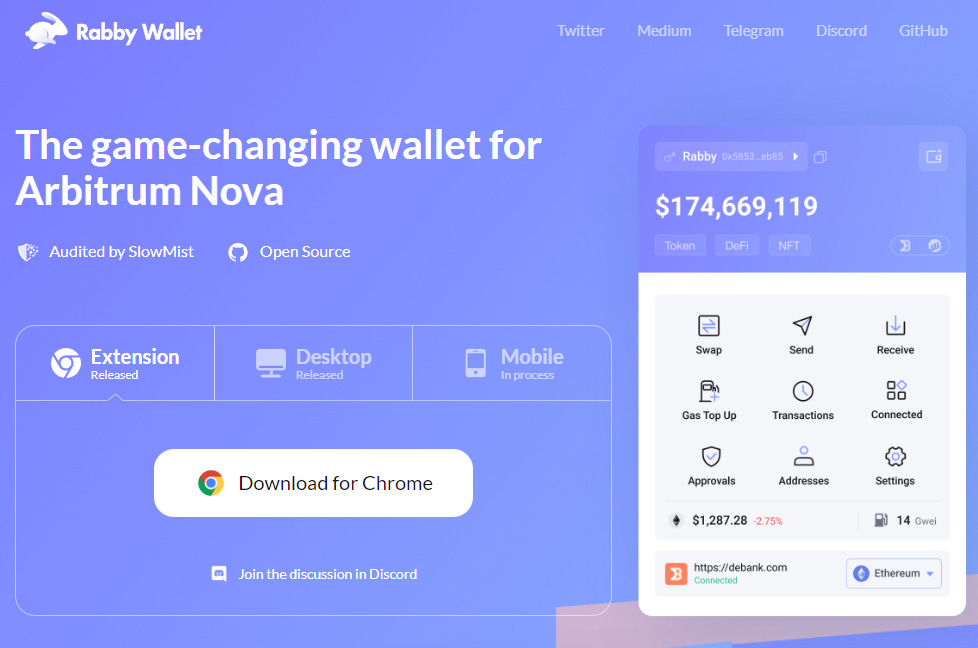
I tried rabby wallet because a colleague mentioned it in a thread and I was curious. Hmm… the first impression was tidy UI. The transaction preview showed token icons, exact amounts, and the contract address clearly labeled. My initial reaction: that felt safer. Then I noticed the permissions manager which lets you see and revoke dApp allowances at a glance. That one feature alone cut my manual auditing time by half—no joke.
Short story: it added friction where it mattered, and reduced friction where it didn’t. Wow! The popup flow prompts you to confirm only what’s necessary. It prevents accidental approvals in many cases. On the other hand, nothing is perfect. I’m not 100% sure the built-in heuristics will catch every new scam pattern, though they do a good job with common ones. I’ll be honest—I pinged the team about a curious UX decision and they answered fast. That matters to me.
Let’s break down what stood out. First, transaction clarity. Second, session control. Third, developer tooling and compatibility across networks. The extension supports multiple EVM chains cleanly. My developer side appreciated the RPC flexibility. But my human side liked the readability—token symbols, names, and a clear «why am I signing this» line. Something as small as a plain-language summary reduces mistakes dramatically.
On security: Rabby isolates connectors and limits long-lived permissions by default. Seriously? That was a relief. It also surfaces which smart contract functions a dApp is calling, and flags common risky operations like approvals to transfer arbitrary tokens. I found the approval UI particularly helpful because it offers easy revoke options and shows allowance amounts in a compact list. However, there are trade-offs—revealing more detail can overwhelm novices. The team balances that by hiding advanced bits behind toggles, which works most of the time.
From a personal workflow lens, the extension sped up token swaps and NFT listings without making me feel exposed. My instinct said: this is the sweet spot—powerful enough for power users, clear enough for newcomers. Though actually, I did trip on one setting at first. I left a default RPC that caused a small delay on a testnet swap. It was user error. Still, the UI made it easy to switch back.
One more thing: integration with hardware wallets. Whoa! That was a lifesaver. I like keeping my seed offline and signing with a Ledger for big moves. Rabby made pairing straightforward, and the flow kept the private key strictly off the browser. That’s an important design decision—keep the critical secrets where they belong and make the extension act as a safe bridge. I noticed fewer accidental exposes with that setup.
Now, let’s talk about performance. Extensions must be light. Really. If it makes your browser lag, people disable it. Rabby felt snappy. UI animations were subtle but purposeful. The devs seemed to have optimized network calls. On the flip side, I did see one memory spike on a very large token list. Not a dealbreaker. It was annoying though—very very noticeable if you had 20 tabs open.
Also, community. I’m biased, but community support and public roadmaps matter. The Rabby team is active in GitHub issues and public channels, and they accept third-party audits. That transparency matters to someone who spends time poking code and asking awkward questions. (Oh, and by the way: the GitHub thread where I asked about a specific approval flow? People chimed in fast.)
From an adoption standpoint, extensions like this lower the barrier to on-ramping users. But here’s the rub: onboarding must teach safe habits without being preachy. Rabby uses microcopy and small confirmations that guide behavior. That helped me teach friends who were new to web3. They made fewer mistakes. Not every wallet does that.
Okay, here’s a small tangent—browser privacy settings can interfere with wallet popups. I ran into a case where an aggressive tracker blocker stopped a callback from a dApp and the approval modal never showed. It took a couple minutes to debug. Small ecosystem friction like that is common and not the wallet’s fault, yet it’s part of the real-world experience. Keep that in mind.
Overall, my impression evolved as I used it. Initially skeptical, I warmed up. Then I found edge cases. Ultimately I settled on a workflow that mixed a hardware wallet for big moves, Rabby for daily interactions, and careful habit checks before every approval. That gave me a practical balance between safety and speed.
Common Questions I Hear
Is a browser extension wallet safe enough for large holdings?
Short answer: use a hardware wallet for large holdings. Long answer: you can mitigate a lot of risk by pairing the extension with a hardware signer, restricting permissions, and using separate accounts for small daily trades versus long-term cold storage. Rabby supports hardware integrations, which helps.
Will switching to a new wallet break my dApp access?
Usually not. However, you might need to reconnect dApps and re-authorize sessions. Plan for a small amount of friction. If you rely on many long-lived allowances, revoke the ones you no longer need. The visibility tools in Rabby make that cleanup easier.